DENDRO-ART Art, Science and the Living World of Trees
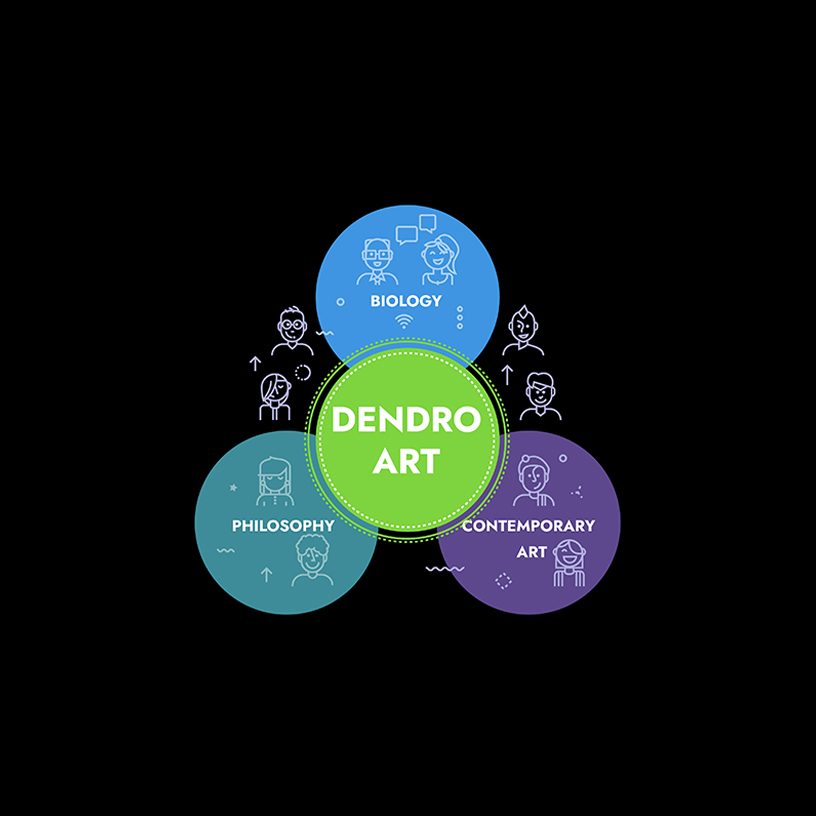
Dendro-art is an artistic and research direction developed by Dr. Lilia Chak within Contemporary Bio-art. It explores a new relationship between humanity and the plant world, with particular attention to trees, approaching living organisms not merely as subjects of representation or sources of materials, but as participants in the creative process.
Definition
Lilia Chak defines Dendro-art as:
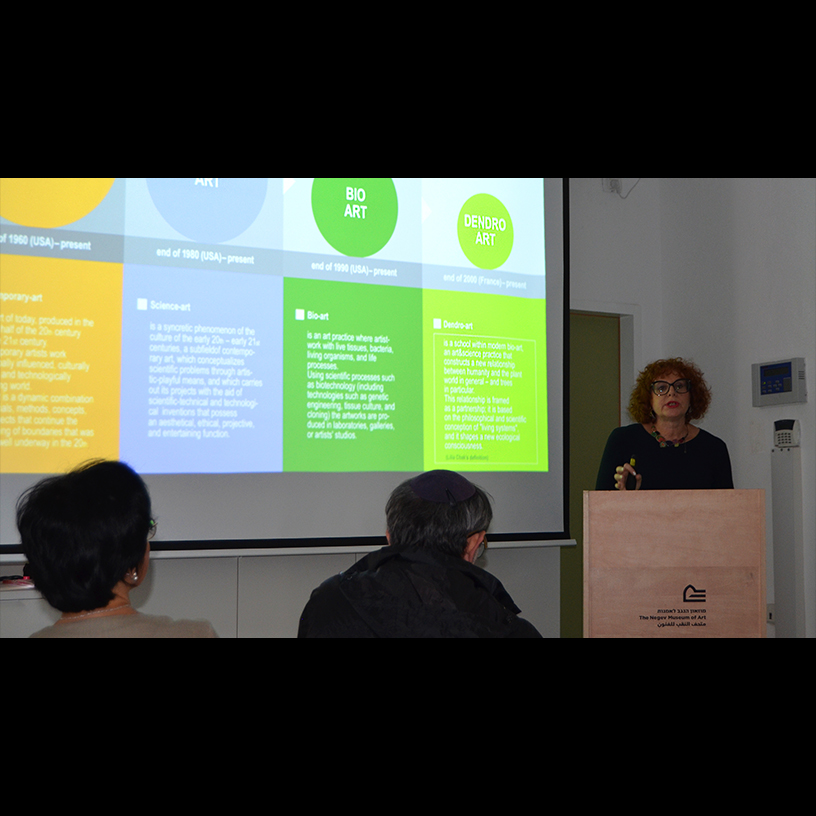
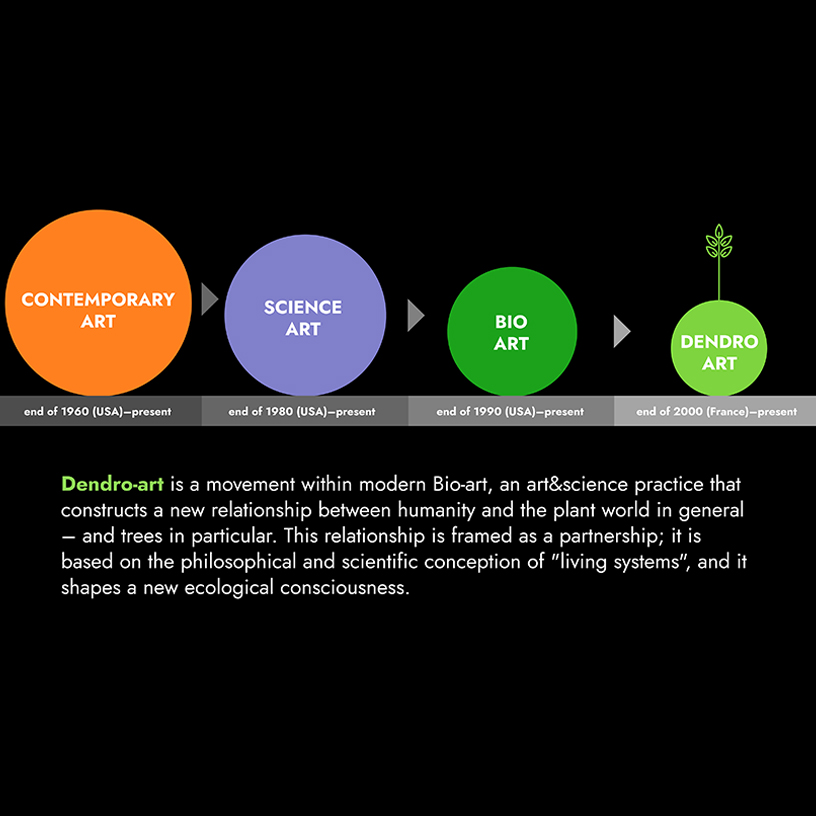
Dendro-art is a school within Contemporary Bio-art, an art&science practice that constructs a new relationship between humanity and the plant world in general – and trees in particular. This relationship is framed as a partnership; it is based on the philosophical and scientific conception of ‘living systems’, and it shapes a new ecological consciousness.
- Lilia Chak, Contemporary Practices in Bio-art: When a Tree Becomes an Artwork (Cambridge Scholars Publishing, 2023), p. xxviii.
At the heart of Dendro-art is the idea of partnership between humans and living plants. A tree is not simply represented by an artist: its growth, biological processes, responses to environmental conditions, and interactions with its surroundings may influence the development and form of an artwork.
This partnership does not imply that trees possess human-like consciousness or intentions. Rather, it recognises their distinct biological activity and their capacity to participate in processes that shape an artwork.
Origins and Development
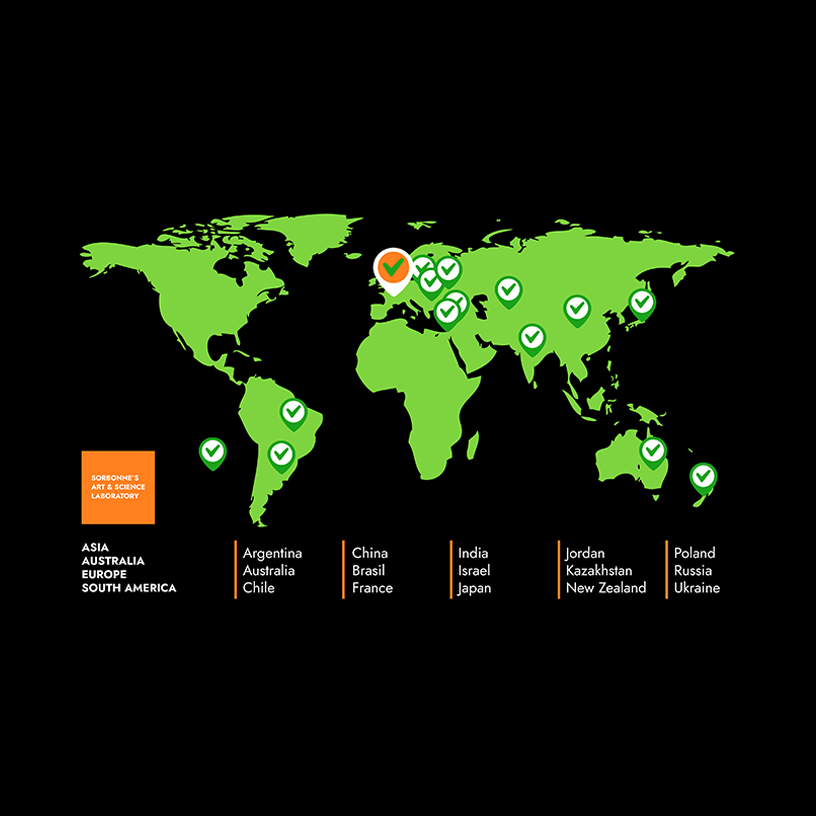
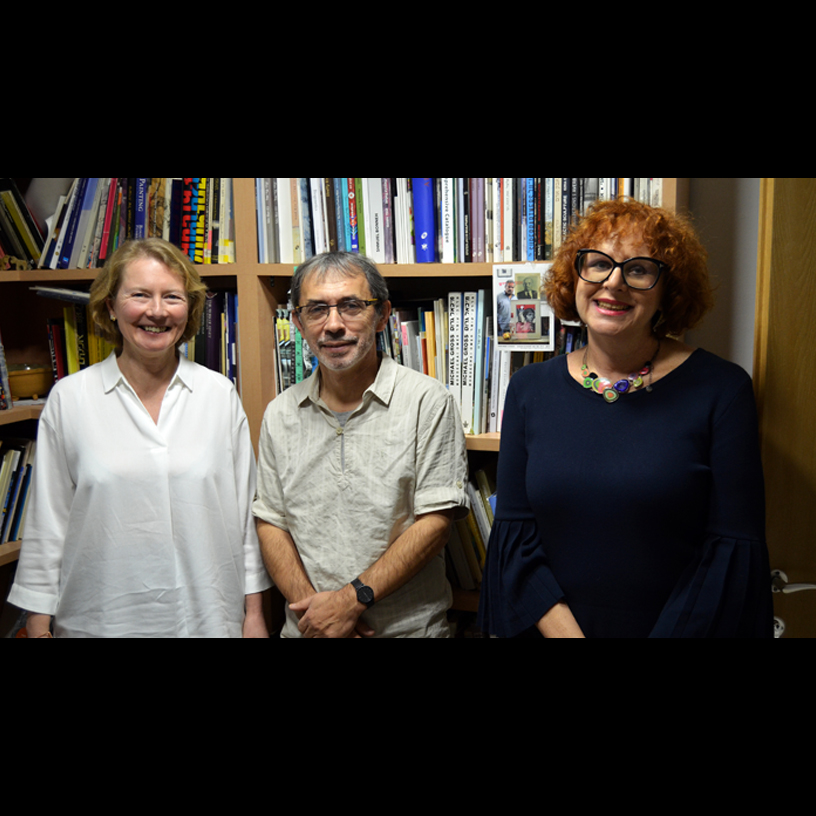
The concept of Dendro-art emerged from Lilia Chak’s doctoral research in Art and Science at Sorbonne University, begun in 2015 under the supervision of Professor Olga Kisseleva.
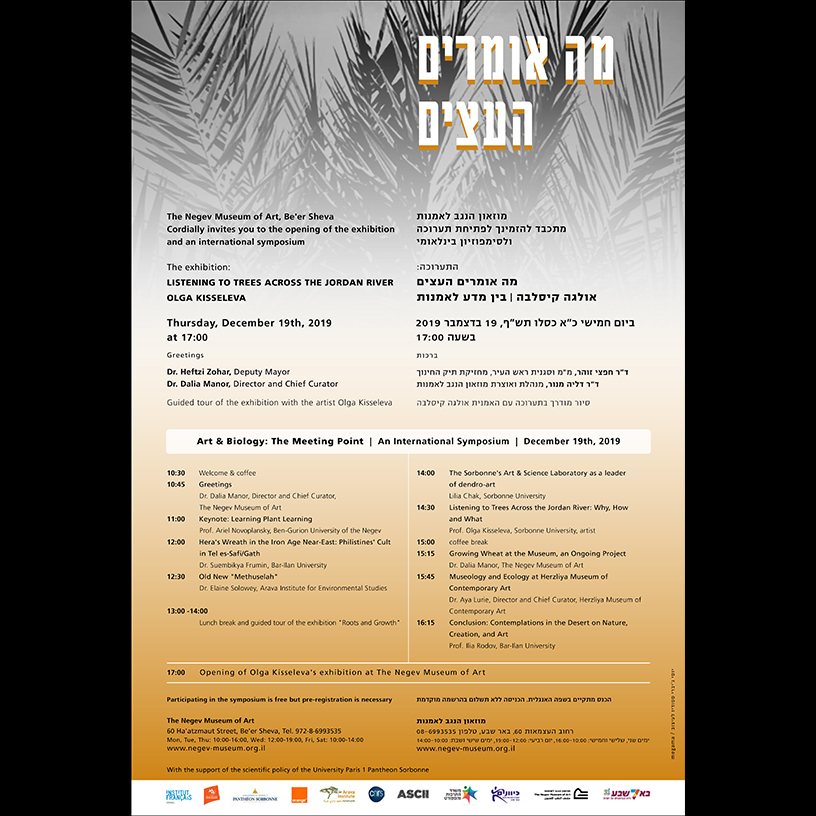
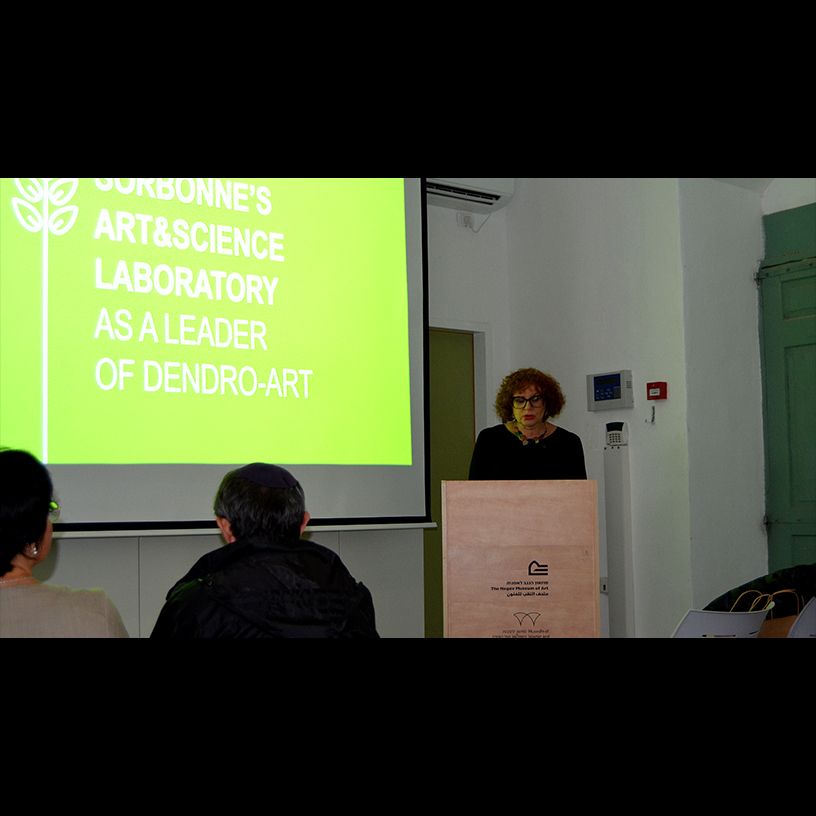
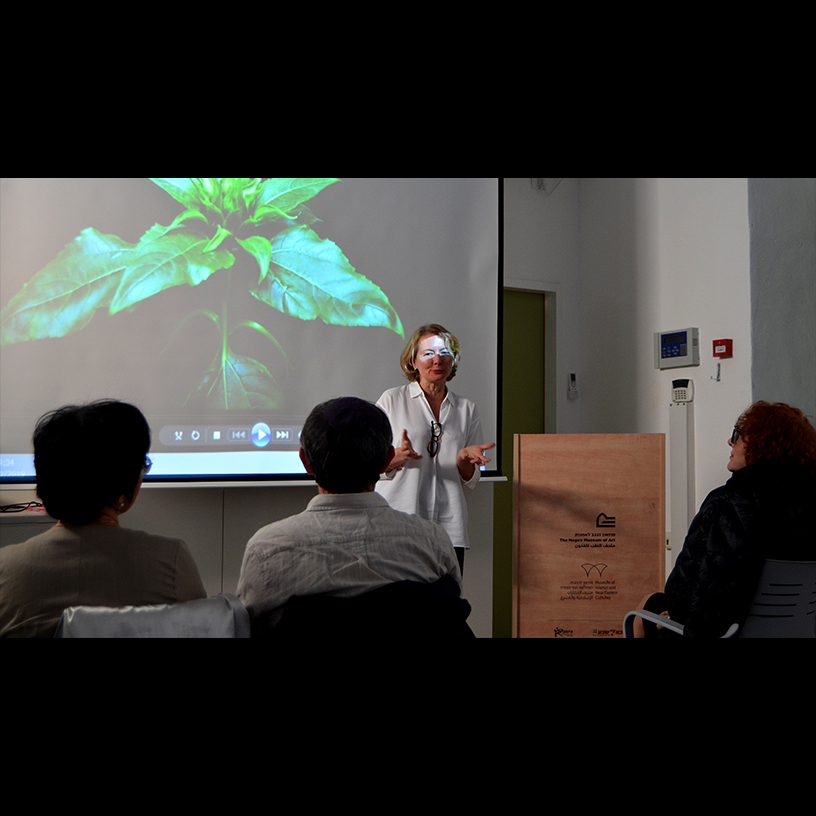
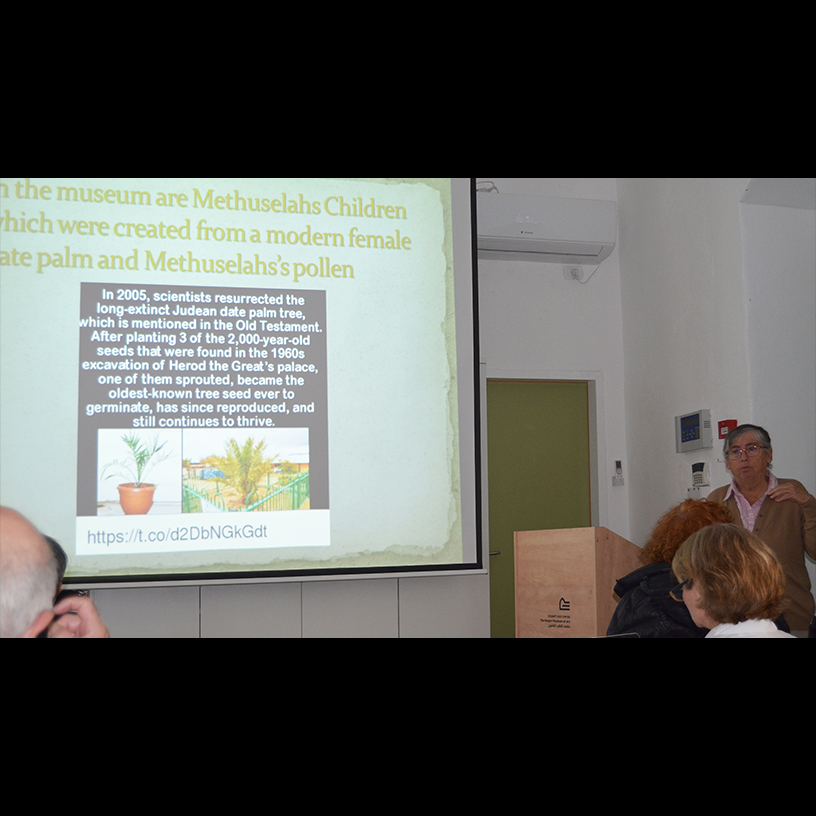
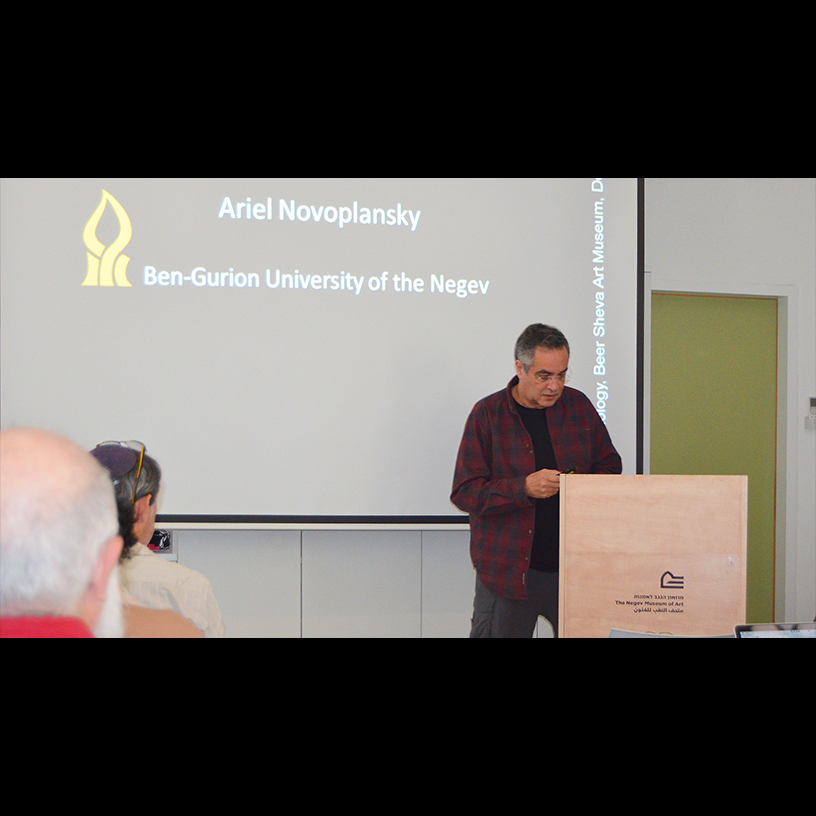
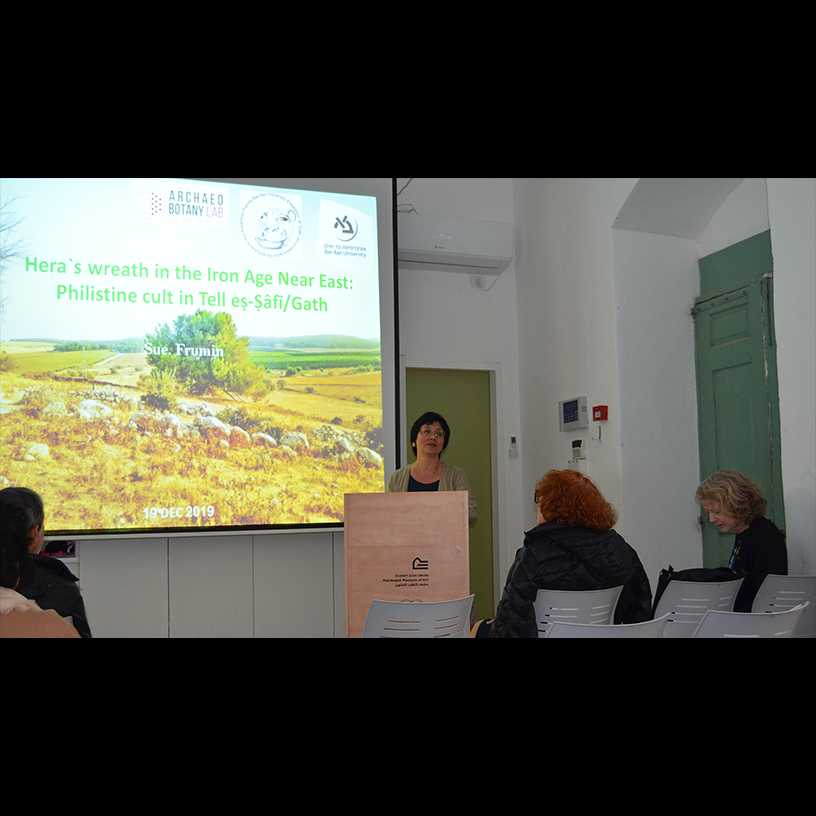
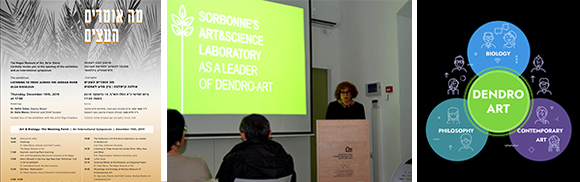
The term and its initial conceptual framework were publicly presented on 19 December 2019 at the international symposium Art & Biology: The Meeting Point, held at the Negev Museum of Art in Be’er Sheva, Israel. Chak’s presentation was titled “The Sorbonne’s Art & Science Laboratory as a leader of Dendro-art”.
The research was further developed through artistic collaborations, exhibitions, academic presentations, and a doctoral dissertation defended at Sorbonne University in 2022. Its theoretical foundation was published in the book Contemporary Practices in Bio-art: When a Tree Becomes an Artwork (Cambridge Scholars Publishing, 2023).
Criteria of Dendro-art
- Lilia Chak proposed eight conceptual and methodological criteria for identifying and discussing Dendro-art:
- The tree as the principal subject — the work focuses on trees in relation to ecological issues and the human environment.
- The tree as an equal partner — the living tree is approached as a participant in the artistic process, not merely as an object of representation.
- A transhumanist philosophical framework — the work reconsiders the relationship between human beings, nature, and the possibilities of transformation.
- Transdisciplinarity — artistic practice brings together different fields of knowledge and methods.
- Interaction between art and the natural sciences — scientific disciplines, particularly biology, are integral to the work.
- A scientific foundation — the artistic project is informed by scientific knowledge, research, or methods.
- The use of living plants — living plants, especially trees, become participants and meaningful elements of the creative process.
- Collaboration across disciplines — the work brings together artistic, scientific, and technological expertise, whether through a team or an individual working across these fields.
These criteria are not intended as a rigid checklist. They provide a framework for examining how an artwork establishes a meaningful relationship between the artist, living organisms, scientific knowledge, and the environment.
Not every artwork depicting a tree or using plant materials is Dendro-art. The essential question is whether the living plant participates meaningfully in the artistic process and can influence the formation, structure, or meaning of the work.
Dendro-art in Artistic Practice
The concept developed alongside Lilia Chak’s artistic research and collaborations with Olga Kisseleva. Their projects explored different relationships between plants, biological processes, cultural memory, and artistic practice.
- Selected works include:
- Ghost Forest / Metushelah
- Balm of Gilead (Afarsimon) and Myrrh
- Ancient Future Forest
- Ancient Future Landscape
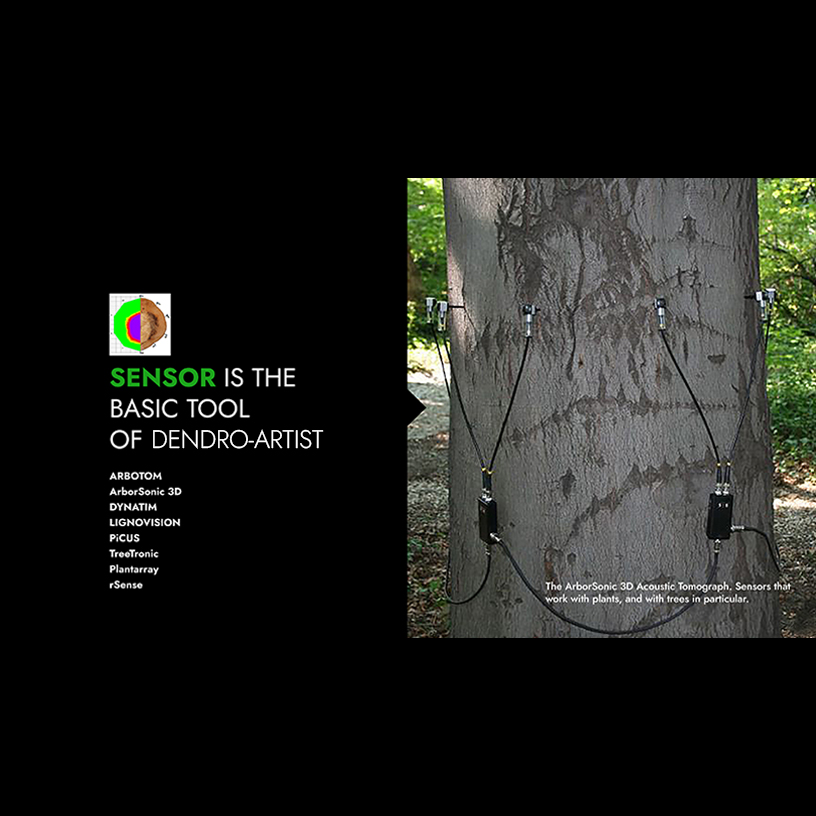
The field continues to expand through contemporary practices involving living plants, ecological research, sensors, environmental data, and computational technologies. These developments raise further questions about the relationship between biological activity, technological mediation, and distributed artistic authorship.
Dendro-art offers a framework for rethinking the relationship between art and the living world — moving from the representation of trees towards a meaningful artistic partnership with them.
Shows:
- – In A Hotter House. Group exhibition. Green House, The Ohio State University, USA. Curators: Doo-sung Yoo, Amy Youngs.
- – Interwoven Scape. Group exhibition. Shenzhen Art Museum, Shenzhen, China, Shenzhen, China. Curator: Qiu Zhijie.
- – Our Bio-Tech Planet. Group exhibition. Museo Orto Botanico organised by Art & Science Node Berlin, Rome, Italy. Curators: Prof. Joanna Hofmann, Dr. Juliet Wallace, Dr. Lara Bruno.
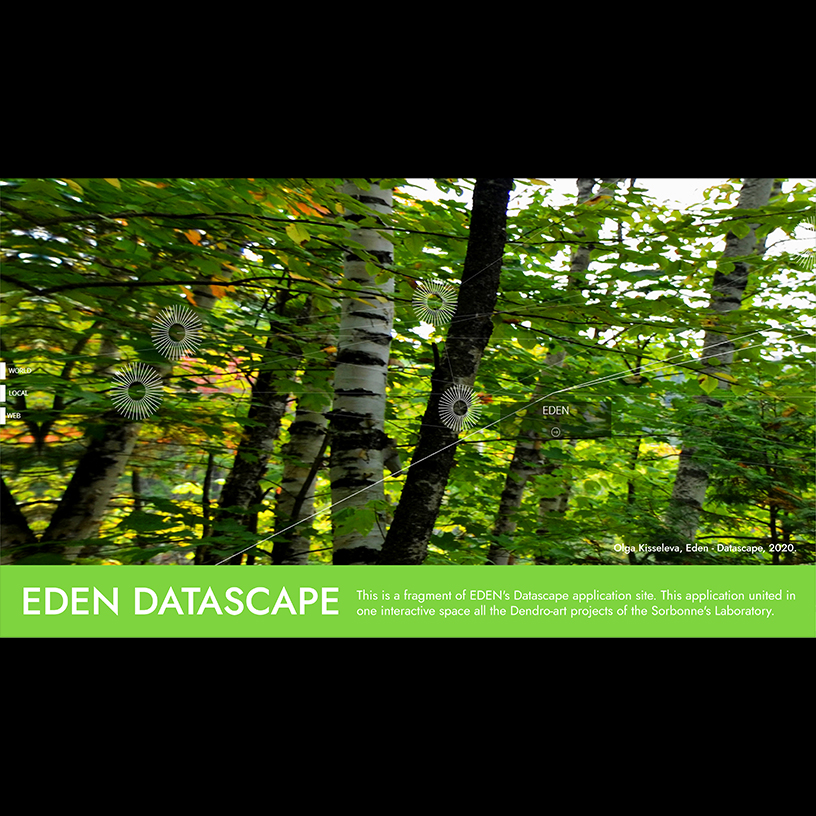
- – EDEN. Group exhibition in collaboration with Prof. Olga Kisseleva. Matsudo International Science Art Festival, Tokyo, Japan.
- – Speculating on the Future through Art and Science. Group exhibition in collaboration with Prof. Olga Kisseleva. BOZAR, Brussels, Belgium.
- – Wonderful World. Group exhibition in collaboration with Prof. Olga Kisseleva. FEFU Art Museum, Vladivostok, Russia. Curator: Julia Klimko.
- – EDEN. Group exhibition in collaboration with Prof. Olga Kisseleva. Ars Electronica, Linz, Austria.
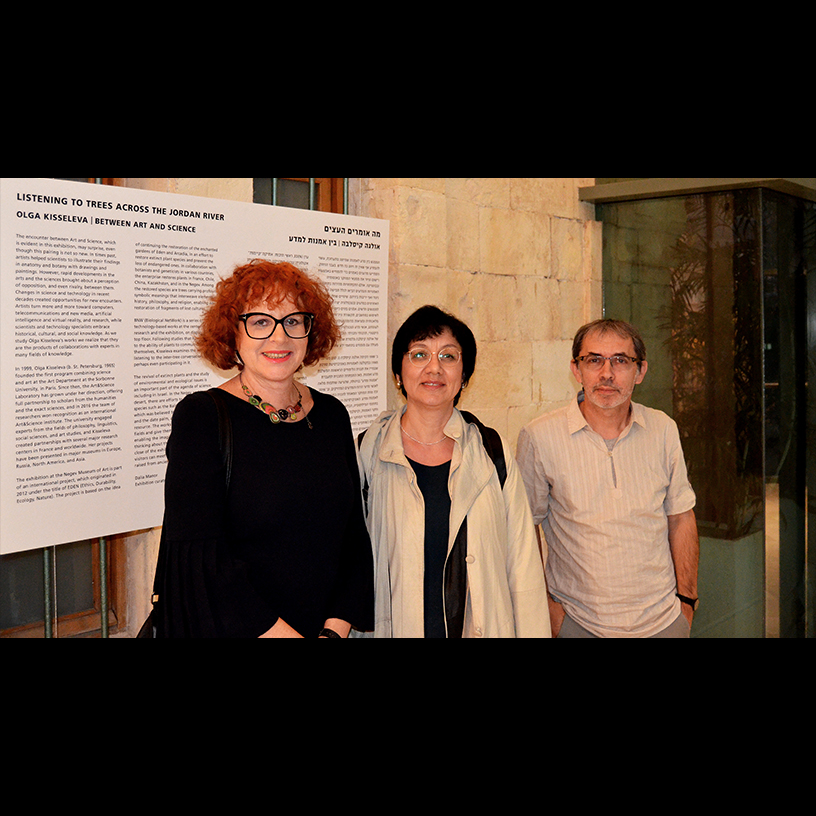
- – Listening to Trees across the Jordan River. Group exhibition. Negev Museum of Art, Beer-Sheva, Israel. Curator: Dr. Dalia Manor.
- – Sky. Group exhibition. Shanxi University Art Center, Taiyuan, China. Curator: Elena Chumina.
Events:
- – The Leonardo/ISAST Laser Talks Jerusalem: Olfactory Art: Beyond the Digital. International conference organised by INEMEA non-profit organization. Jerusalem, Israel. Chair: Galina Bleikh. Moderator: Daria Kesler. Coordinator: Dr. Lilia Chak.
Title of my presentation:A Lost Fragrance and the Future of Smell
. - – Scent Art Festival. Workshop organised by Creative Factory Veldze. Riga, Latvia.
Title of my presentation:The Afarsimon
. - – Dendro-art. Workshop organised by Bar-Ilan University. Ramat Gan, Israel.
Title of my presentation:Dendro-Art: Tree as an artwork
. - – MANOFIM. International conference organised by Jerusalem Contemporary Art Festival. Jerusalem, Israel.
Title of my presentation:Art, Biology and Ecology
. - – EDEN. Workshop at organised by Sorbonne in collaboration with ITMO University. St. Petersburg, Russia.
Title of my presentation:Dendro-art – classification of projects
. - – The Human to Come. International symposium organised by Le Fresnoy – Studio national des arts contemporains in collaboration with CNRS. Lille, France.
Title of my presentation:Listening To Trees Across The Jordan River
. - – Art and Biology: The Meeting Point. International symposium organised by Negev Museum of Art. Beer-Sheva, Israel.
Title of my presentation:The Sorbonne Art & Science Laboratory as a leader of Dendro-art
. - – Ethical Durable Ecology Nature. International symposium organised by Château de Rentilly – Frac Ile-de France. Paris, France.
Title of my presentation:The Scents of the Ancient World - a Different Reality?
.
Media:
- – Lilia Chak.
Generative and Interactive Practices at LASER Talks Jerusalem
, article, Leonardo Volume 59, Isuue 5. MIT Press Direct. MIT, USA. - – Lilia Chak, Olga Kisseleva.
Adopters of Creative Technologies
, article, The Encyclopedia of New Media Art available digitally on the Bloomsbury Visual Arts hub via institutional subscription or perpetual access. Bloomsbury. London, UK. - –
Зачем человеку деревья?
, interview. Sheinkin40. Tel Aviv, Israel. - – Lilia Chak, Olga Kisseleva.
Adopters of Creative Technologies
, article, The Encyclopedia of New Media Art: Volume 2: Artists & Practice (forthcoming 2027). Bloomsbury. London, UK. - – Qiu Zhijie.
Interwoven Scape
, catalogue, page 18. Shenzhen Art Museum. Shenzhen, China. - – Lilia Chak.
Contemporary Practices in Bio-art: When a Tree Becomes an Artwork
, book (ISBN: 1-5275-1949-X; ISBN13: 978-1-5275-1949-7; Pages: 562; Color illustration: 174). Pages by permission. Cambridge Scholars Publishing. Cambridge, UK. - – Lilia Chak, Pierre-Antoine Chardel, Olga Kisseleva, Emeline Gougeon, Armen Khatchatourov.
Allier les arts et les technologies pour stimuler une autre compréhension de l’humain (dans un dialogue renouvelé avec la nature. Réflexions autour d’ EDEN ARTECH)
, Conference paper (hal-04063908, version 1). HAL open science. Paris, France. - – Prof. Ilia Rodov.
Concluding Remarks: Contemplations in the Desert on Nature, Creation, and Art
, article. Negev Museum of Art. Beer-Sheva, Israel. - – Lilia Chak.
Between Art and Science
, brochure for "Listening To Trees Across The Jordan River" exhibition. Negev Museum of Art. Beer-Sheva, Israel. - – Elena Chumina.
Небо
, article. St. Petersburg Union of Designers. St. Petersburg, Russia.
Collections:
- – Ancient Future Landscape #1, #2. Edition 1/5. Private Collection. Tel Aviv, Israel.
- – Shadow_Metushelah #1. Edition 1/7. Shanxi University Art Center. Taiyuan, China.