AI ELYAH
Constellating Identity Through Code and AI
AI-Assisted art with Artist processing
Every algorithm carries a memory. Every memory seeks a form.
Dr. Lilia Chak
See here: Elyah. Video.
See here: Yah Ribon. Video.
Every civilization develops its own ways of encoding and transmitting memory. Long before computers, poets created structures within language to preserve meaning across generations. One of the oldest examples is the acrostic — a poetic form in which initial letters reveal a hidden text. Beyond a literary device, the acrostic can be understood as an early algorithm: a system of rules carrying identity, memory, and meaning through time.
AI ELYAH explores what happens when these ancient systems of encoding enter the age of artificial intelligence.
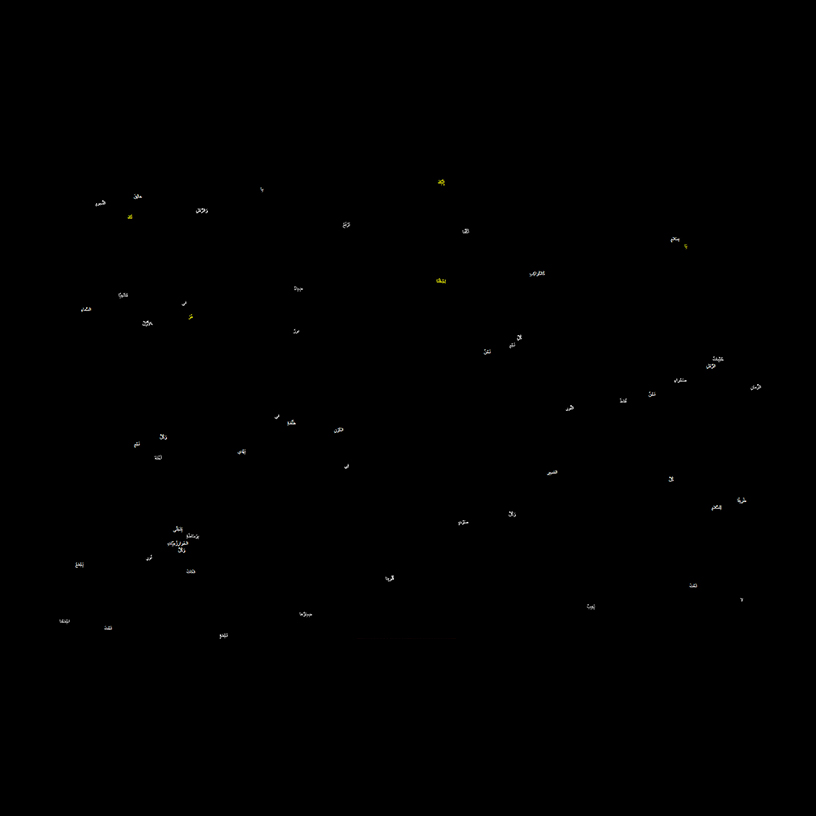
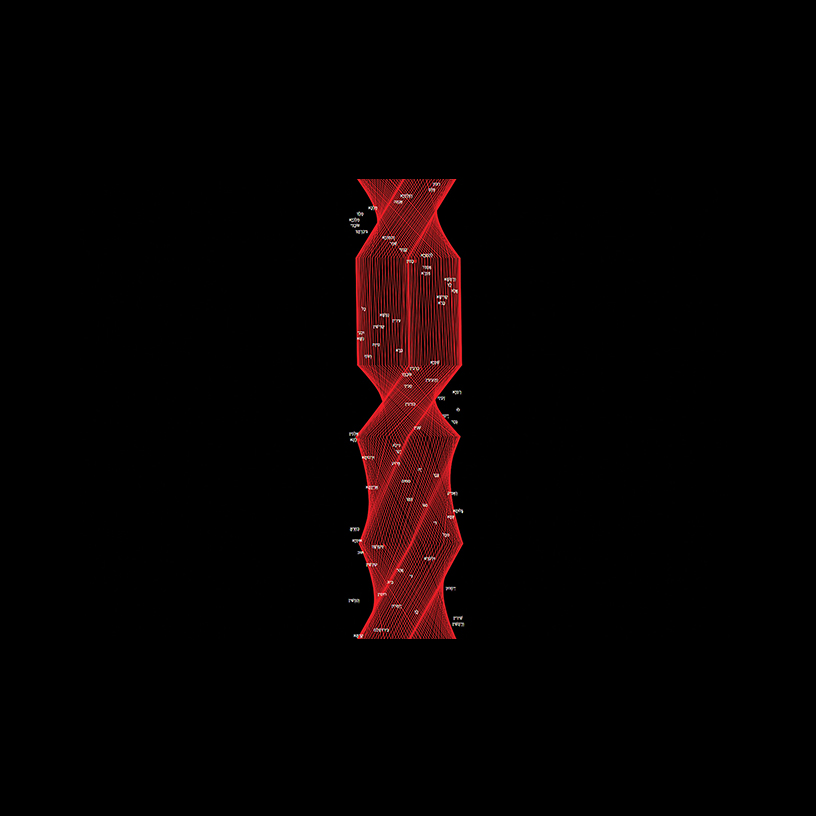
The work is a dual-channel generative audiovisual installation bringing together two sacred poetic traditions. One channel presents Yah Ribon, the sixteenth-century Hebrew Shabbat hymn by Rabbi Israel Najara, whose verses form the acrostic ישראל (Israel). The second introduces ELYAH (“To Him”), a newly created Arabic poem developed in collaboration with artificial intelligence, whose stanzas form the acrostic إلياه.
Rather than translating one tradition into another, the installation allows Hebrew and Arabic to exist as parallel voices, each preserving its own rhythm, imagery, and cultural memory. Their relationship is not based on fusion, but on resonance — like distant stars whose connections become visible only through the formation of a constellation.
The visual language of the installation extends the logic of the poems themselves. Letters become points of light, transformed by generative code into continuously shifting constellations. Each execution creates a unique choreography of language, sound, and movement, suggesting that cultural memory is not a fixed archive but a living process constantly reconstructed through interpretation and technology.
At the center of AI ELYAH is a new form of collaboration between human imagination and artificial intelligence. AI is not understood as an autonomous creator or a replacement for the artist, but as a new artistic medium — a generative partner through which language, memory, and visual imagination can take new forms.
The work unfolds across several historical layers: medieval poets encoded meaning through linguistic structures; contemporary programming transforms these structures into generative systems; artificial intelligence introduces new possibilities for poetic creation within a continuing history of cultural transmission.
The project asks:
Can artificial intelligence become another carrier of cultural memory?
AI ELYAH is part of the ongoing Piyyut Coding series (2023–), an artistic research project exploring the relationship between medieval Jewish liturgical poetry, generative programming, and artificial intelligence. Across the series, code is understood not merely as a technological tool, but as a continuation of humanity’s ancient desire to preserve memory through structure. As letters dissolve into constellations and voices unfold across two synchronized projections, AI ELYAH proposes that identities, languages, and histories are not fixed entities, but living configurations — continually reshaped through connection, imagination, and interpretation.
Process / AI Collaboration
AI ELYAH is created through a collaborative process involving human artistic vision, generative programming, and artificial intelligence systems.
- Concept and artistic direction:
- Lilia Chak
- Generative programming:
- Alexander Chak
- Arabic poem:
- created in collaboration with Claude AI
- Arabic music and performance:
- created with Suno AI
- Aramic poem:
- Rabbi Israel ben Moses Najara
- Aramic music and performance:
- public domain E’s Jammy Jams
The project explores a distributed model of authorship in which artificial intelligence functions not as an autonomous creator, but as a generative partner within an artist-led process. Each system contributes a specific layer — language generation, sound creation, and computational transformation — while the conceptual framework, artistic interpretation, selection, and final decisions remain guided by the artist.